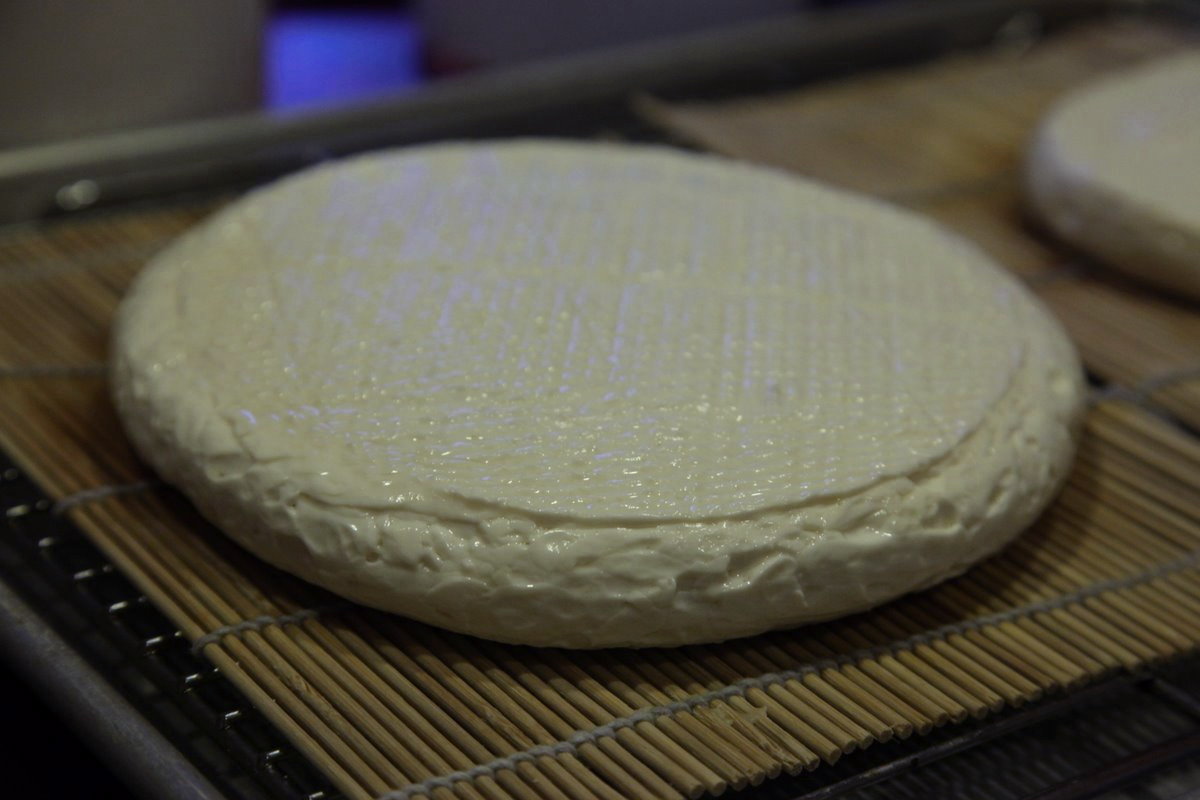
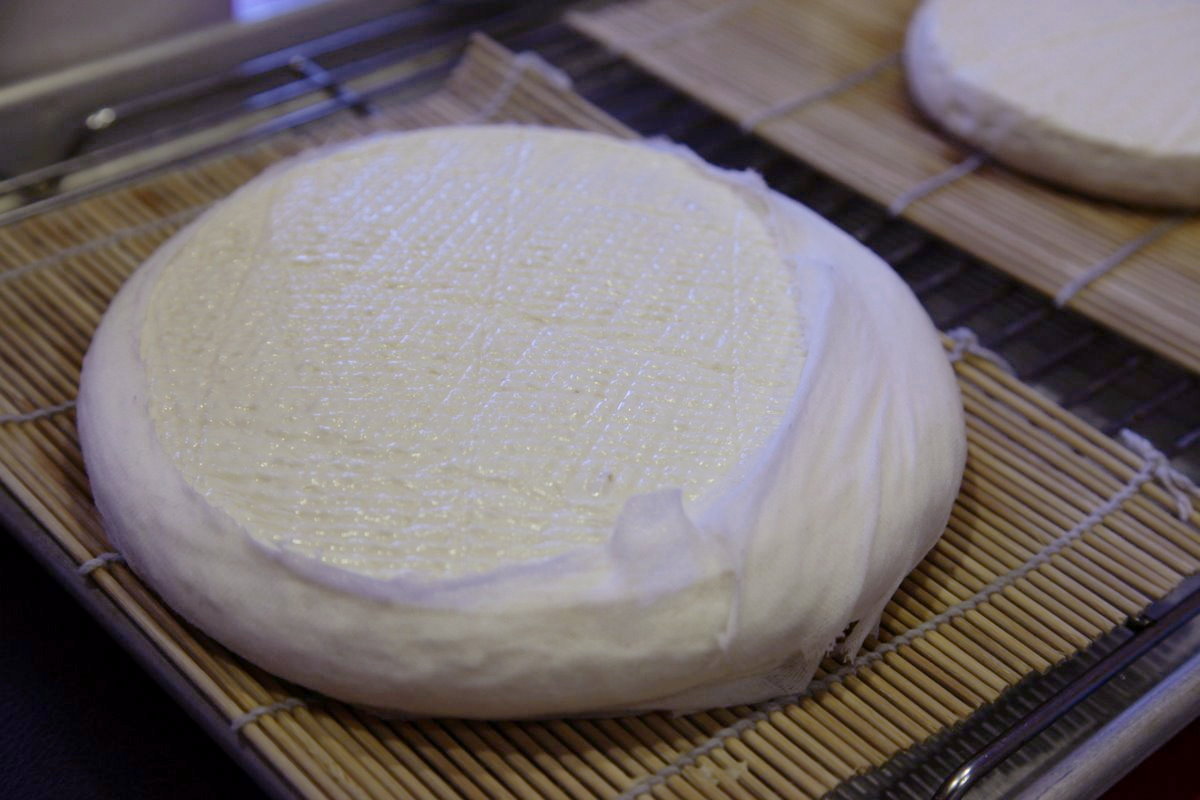
Debbie Driscoll, who has become my partner in cheese crime, visited Italian cheesemakers last fall. We spoke of her trip during our last podcast, where she also promised to post blog articles on her trip here on this blog. I am happy to present the first entry on her trip.
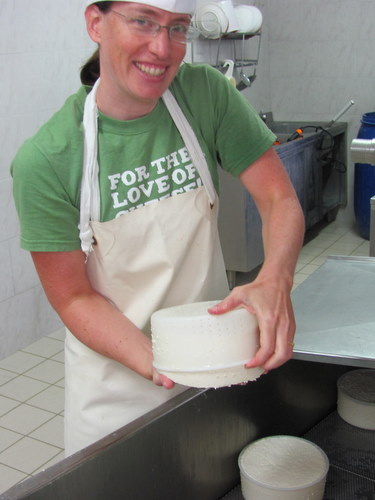
This past autumn, fueled purely by a passion for cheesemaking, I quit my jetsetting job at a design consultancy in Portland, OR and headed to Italy to apprentice (a.k.a. volunteer as a migrant worker) at a pecorino formaggeria in Tuscany. While there, I managed to land a second gig at a buffalo and cow milk cheese producer in Jesi, Italy.
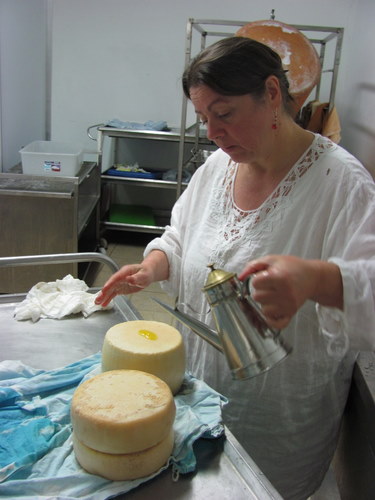
This was too good of an experience not to share with the greater cheesemaking community, so through this blog I’ll share everything I can about the experience – the recipes, tools and techniques from the two creameries where I was lucky enough to make cheese alongside masters of the craft.
But first I should answer the two questions I get asked most often when I tell others about my experience. Why cheesemaking? Why Italy?
At the time of my trip I was honestly at a loss to explain, but after months of impassioned cheesemaking plus some space to ruminate, my mind slowly made sense of what felt like a primal need to make cheese.
My original career choice was product design – a degree program that offered a perfect balance of thinking and making. The path I wound up following in the decade since graduation resulted in countless PowerPoint decks, an encyclopedia worth of carefully crafted email communications, and what felt like a barely perceptible role (by the time the product hit the shelf) in the production of printers, air conditioners, and credit cards. As a manager of the people designing these products, it was hard to put my finger on what I did every day since there was little if anything to physically show for my work.
In cheesemaking, my day-long efforts resulted in something that could be consumed through all the senses. It fed my needs for craft and gave me something to “show” for my work that could be appreciated by others. To my surprise, it also required an incredible amount of thinking. I found myself so wrapped up in dosage conversions, acidity titrations and discerning which strains of bacteria to use that I was unable to talk at times, much to my husband’s consternation.
My choice to study in Italy was a little less philosophical. In early 2010 my sabbatical was approaching (I hadn’t yet decided to leave my job). Combining my cheesemaking hobby with some travel seemed like an ideal sabbatical pursuit. I had already traveled a good bit in France can’t stand to eat goat cheese, so France didn’t seem like the best option. I love cheddar cheese, but heading to England didn’t seem like as much of an adventure as I was hoping for. On the other hand, Italians make great non-goaty cheese and I’d never been there. And with that logic worked out, I became a woman on a mission to find cheesemakers in Italy.
After months of looking for ways to make contact, an employee at The Cheese Bar recommended looking into the organizations Farm Exchange and World Wide Opportunities in Organic Farming (WWOOF), both of which are organizations that connect farms in need of an extra hand with volunteers who want to work on farms. WWOOF had many more cheesemakers on their list so I paid $35 to join the Italian chapter and began sending emails to all the cheesemakers without goats.
After receiving several notes explaining that the sheep weren’t going to be producing any milk at the time of my visit (learning #1: lactation cycles of sheep) and no replies for cow owners, one family replied that if I got my tookus there quickly I’d get to do some cheesemaking with them before their herd went dry for the season.
I had just left my job the week before, so I was free to flit off to Italy. So I booked a ticket, checked out a stack of Italian language learning books from the library, and 3.5 weeks later was on a flight to Rome.
After about 36 hours of air, train, subway and bus travel, I arrived just past nightfall to Podere Paugnano in Radicondoli, Tuscany, about 30 miles west of Siena. I was welcomed by owners Giovanni and Giovanna Porcu, along with their daughters Tamara and Natalie.
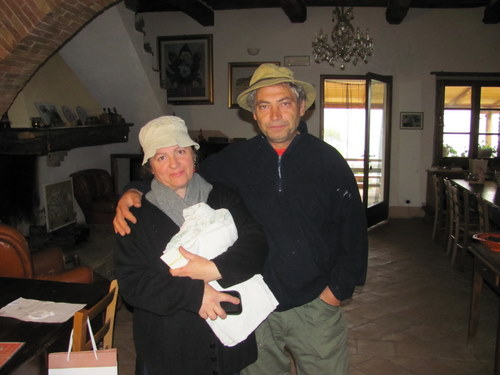
Giovanna and Giovanni, my kind and wonderful hosts in Radicondoli, Tuscany
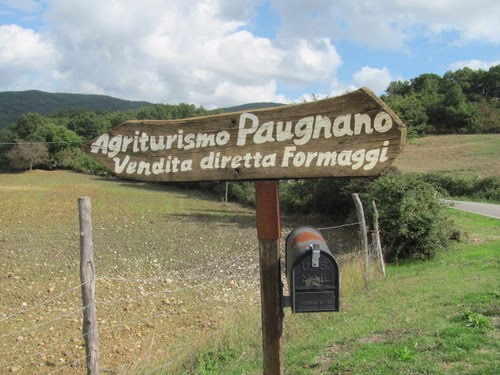
Entrance to Giovanni and Giovanna’s Agrotourismo (working farm bed and breakfast) and Cheese Shop
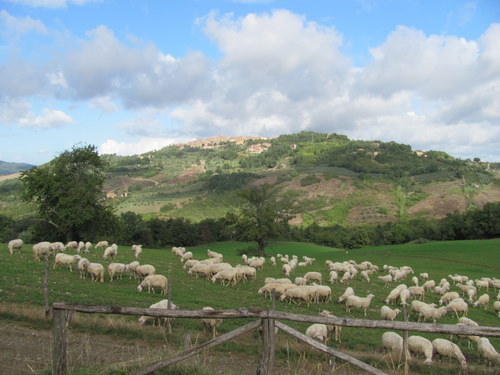
The Porcu’s herd of Sardenian milk sheep.
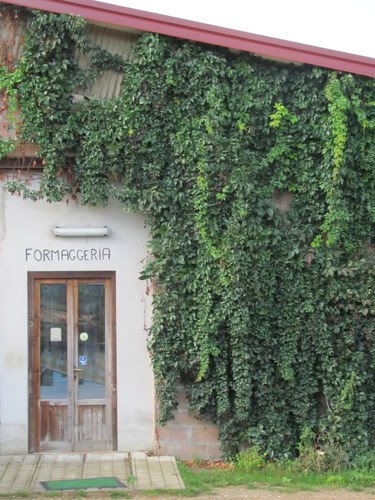
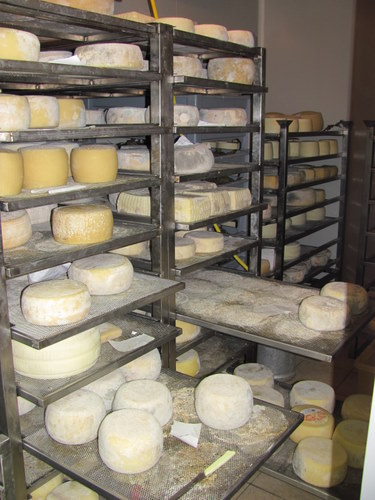
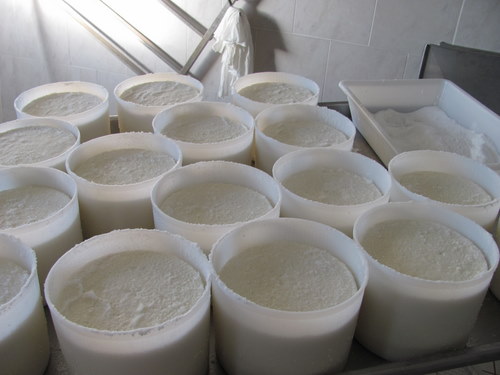
The Formaggeria (cheese shop)
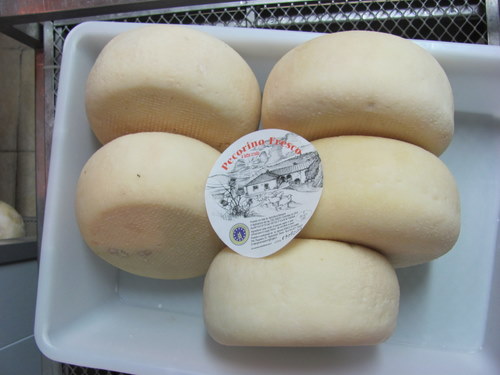
In addition to 300 Sardinian milk sheep and the formaggeria, Podere Paugnano includes an agrotourismo (a working farm bed and breakfast), a variety of farm animals and a by-reservation restaurant of sorts in which Giovanna prepared phenomenal five- to seven-course meals for local or international guests in her kitchen.
After nearly two weeks of working and studying at Podere Paugnano, one of their agrotourismo guests very kindly arranged my second apprenticeship with his sister- and brother-in-law, Giulia and Antonio Trionfi, who run Caseificio Piandelmedico in Jesi (Ancona province) near the Adriatic coast.
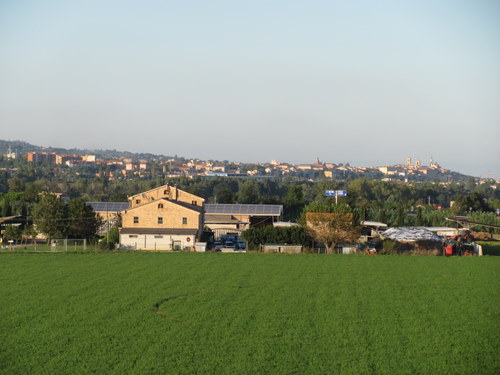
Caseificio Piandelmedico
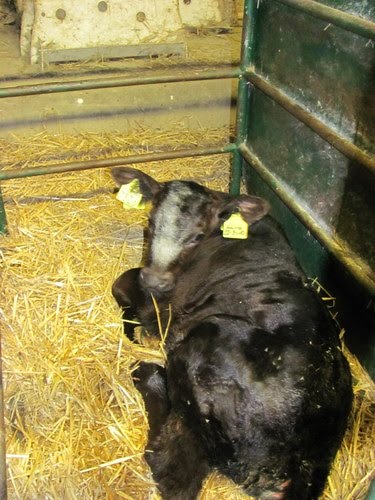
A buffalo calf that was born on the first day I arrived
Antonio managed the feed and care of their 150 Asian water buffalo and 150 milk cows (of varying breeds) while Giulia, with assistance from her husband Chris, managed the creamery. They produced milk, mozzarella, yogurt, and a wide range of fresh and aged cheeses.
I kept a separate blog of my travel experiences along with the many amazing Italian food recipes I learned from Giovanna, including quite a few that utilized their outstanding pecorino cheeses, at www.brettanddebbie.com (see the September and October 2010 archives).
In this blog I will focus on cheesemaking techniques and the recipes I learned at Podere Paugnano and Caseificio Piandelmedico. I’ve been able to test nearly all of the recipes I learned at Piandelmedico, but am still looking for sheep milk so I can try out the recipes from Podere Paugnano. Please let me know if you have a connection or if you are able to give the recipes a try!
My hope is that this blog comes alive with comments, experiences and suggestions from the readers and cheesemakers out there. Let the discussion begin!